On the tracks of Diogo Alves, Lisbon's greatest serial killer
Sensitive souls should abstain !
It is 2.15pm on 19 February 1841. In Cais do Tojo, the crowd has gathered to observe the last breath of the ferocious beast. A few sobs emerge from the heavy silence. The people of Lisbon had come to ward off the evil that had haunted the city’s alleys for five years. This evil is Diogo Alves, the greatest serial killer Portugal has ever known. Having spread it to the four corners of Lisbon, O Pancada has a rendezvous with death on this cool winter’s day. With his neck in the noose, his cold gaze pierces the horizon. What is he thinking at that moment ? Diogo dances at the end of his rope, it is during these long minutes that life will pass before his eyes.
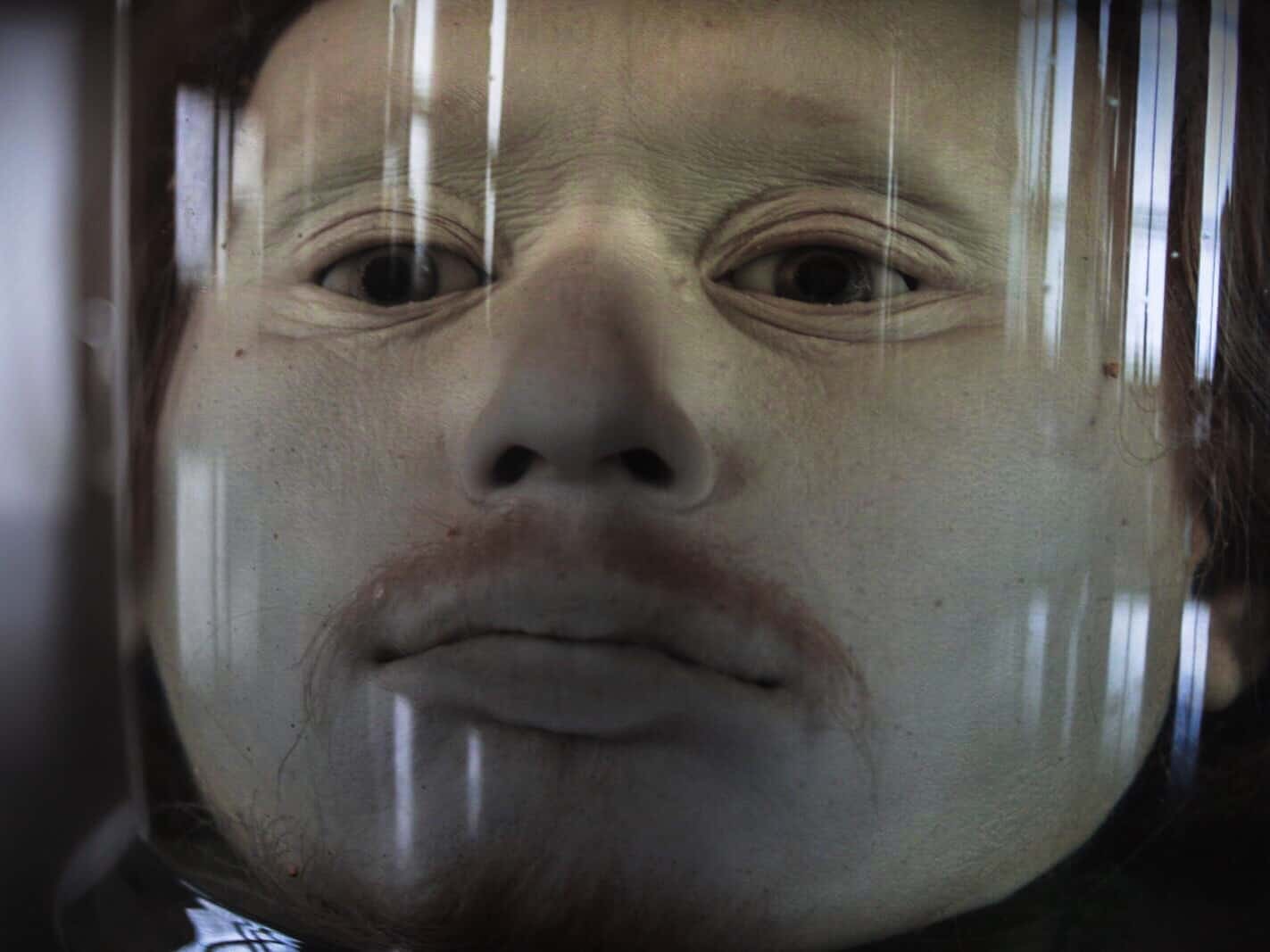
After the execution, Dr. Lourenço Gomes, an adept of phrenology, kept the head of Diogo Alves. He wanted to study the skull of the murderer and find a correlation between the physical form and his behaviour. Preserved in formaldehyde, the head can still be seen at the Lisbon Medical School.
De Espanha, nem bom vento, nem bom casamento
The year was 1810. Diogo Alves was born in the heart of Galicia, in the parish of Santa Gertrudes de Samos. His parents, Anselmo and Rosa, were hardworking and honourable farmers. During this period, ravaged by the imperial wars, many Galicians chose to emigrate to Portugal. At the age of 13, Diogo crossed the Spanish border, attracted by the headlights of a booming Lisbon. Working at first as a hall boy, he later became a coachman in the service of great aristocratic families such as the Count of Belmonte, de Castro e Cunha.
During this period, the storm of the civil war appeared in Portugal. These dark clouds will taint Diogo’s mind. It must be admitted that Lisbon had never been kind to him. He responded in kind, lending himself to gambling and vice. In order to have a comfortable and effortless life, Diogo became a mean, anti-social and aggressive young man. One of his last employers, Dr. Joao Thomas de Carvalho, dismisses him for his ferocious instincts… which will not leave him until the scaffold.
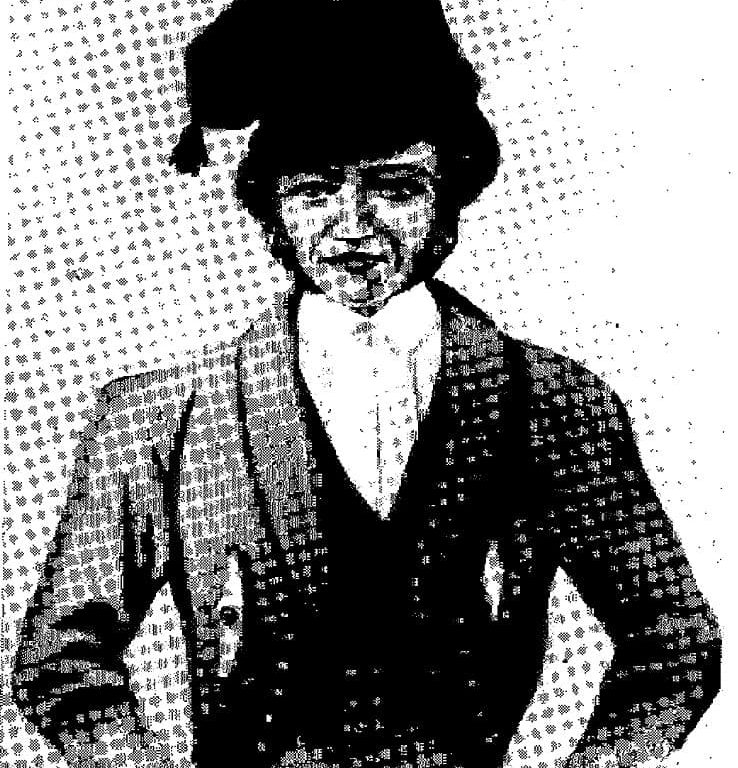
Diogo Alves. Engraving of 1840
The devil dresses in tasqueira
As an adult, Diogo has earned the nickname Pancada because he is completely illiterate and a bit of a simpleton. His life is about to change completely when he starts to become the lover of Gertrudes Maria, a native of Mafra. Nicknamed Parreirinha, Gertrudes is the owner of a tavern in Palhavã, where on Sundays the thieves meet and the Tejo wine flows freely. Drunk, the Parreirinha is extremely perverse, not hesitating to fornicate in front of her children. She is said to be wild, sadistic and manipulative. Gertrudes Maria covers Diogo with the most unhealthy vices. She wields enormous power over his mind, having no difficulty in convincing Diogo to become a criminal.
For, like her new love, the Parreirinha loves the least effort, petty theft being the easiest way to become rich. Following Gertrudes’ instructions, Diogo begins to attack the merchants of the capital. But these sporadic robberies are no longer enough for the Portuguese Bonnie, and Diogo has to satisfy his thirst for wealth in any way he can. Pancada is thus willing to suffer to be loved.
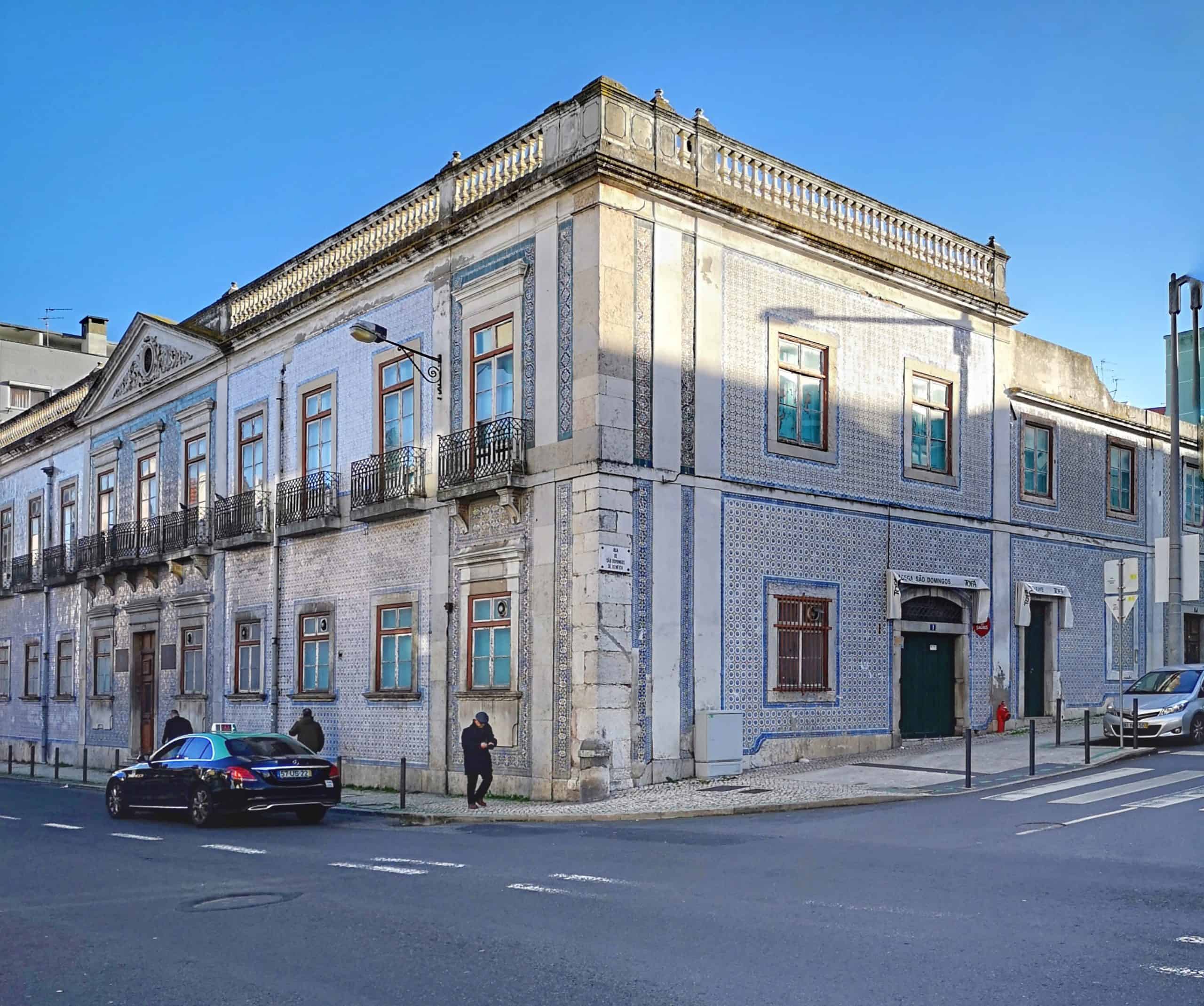
Gertrudes is said to have run the tavern in the present-day district of São Domingos de Benfica at 25, estrada de Benfica. Could it be in the present Adega de Sao Domingos ?
The killer of the Águas Livres aqueduct
From 1836 onwards, the tranquillity of the Quinta da Rabicha collapses under the weight of Diogo Alves’ victims. From being a simple thief, he became a famous criminal, hated by the press and feared by the people. With his tragedies staged like a play, Diogo will forever be linked to the aqueduct of the Free Waters. During the first half of the 19th century, the aqueduct served as a viaduct for many farmers, notables and students from Benfica. Its passage made it easy to reach the capital while avoiding the Alcantara valley. In the evening, the good people returned from their day’s work with their pockets full. Diogo Alves enters the scene. Armed with a pair of forged keys [it is still a mystery how he got them], he hides in the gallery of the aqueduct, on the lookout for a prey. After stealing the victim’s belongings, he drags her to the highest point and throws her down, simulating suicide.
In order to continue to satisfy Gertrudes’s ever-growing demands, Diogo even creates a gang. Among these bandits were Manuel Joaquim da Silva, known as Beiço Rachado, José Claudio Coelho, known as Pé de Dança, João das Pedras, known as Enterrador and José Maria Lopes, known as Apalpador. In June 1837, 76 people died. The authorities put this down to a series of unfortunate suicides (times are hard). But this accumulation of deaths terrorised the population, and the wildest rumours spread from tasca to tasca. To calm people down, the police decides to close the aqueduct.
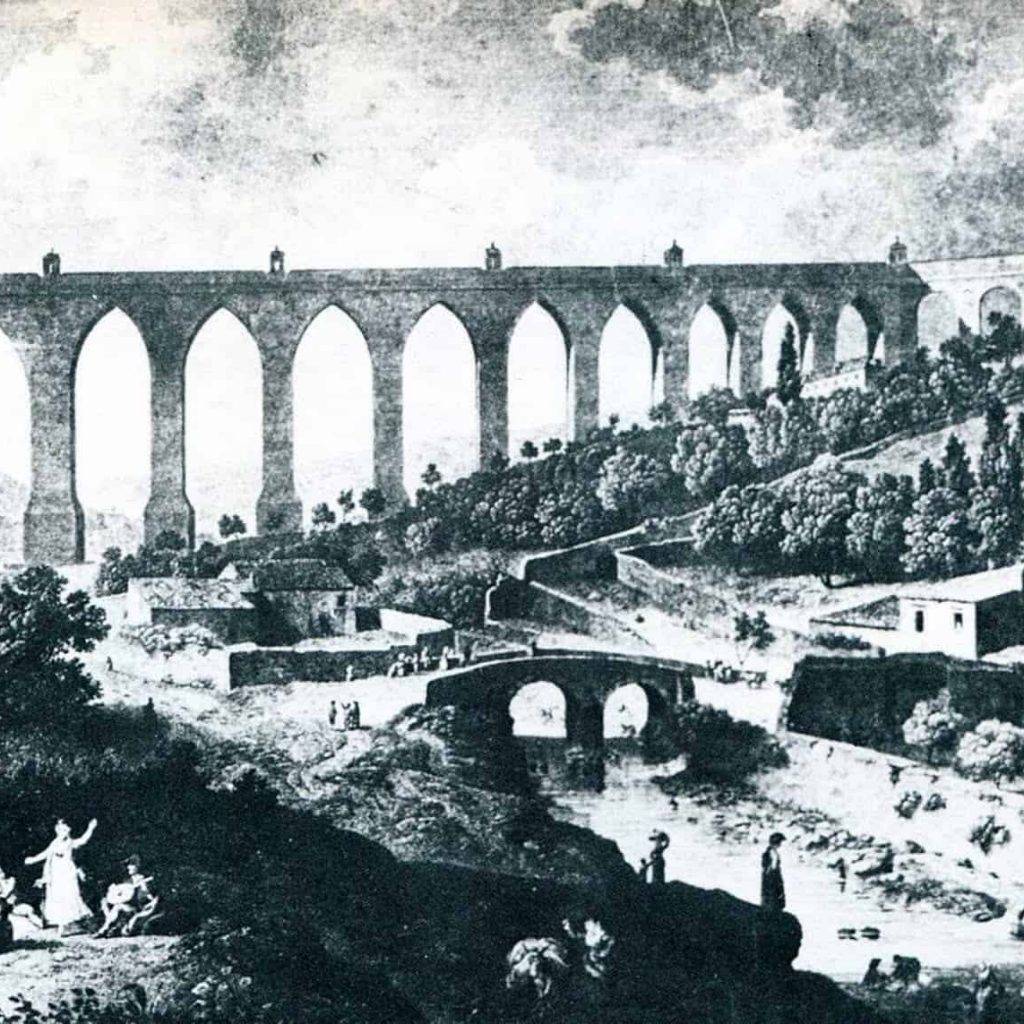
Built from 1732 under the reign of John V, the aqueduct of the free waters is the greatest work of Portuguese civil engineering. With its majestic arches, it dominates the Alcantara valley. At the foot of the highest arch, 65 metres high, the Quinta da Rabicha is a place of peace. Henry l'Eveque depicts the peaceful country life of the quinta in an engraving from 1809. Portuguese families picnic and dance to the sound of the Portuguese guitar.
O país era dos malfeitores e a cidade um covil de assassinos e ladrões Alberto Câmara e Santos Junior
Unable to operate from the heights of the aqueduct, Diogo and his men left the Palhavã neighbourhood for another hideout. The villains decided to rob the houses of the notables, strangling potential witnesses. The looters even go to ransack the chapels loaded with Brazilian gold ! The motus operandi is always the same. They rely on accomplices (a guard, a hall boy). The loot of gold and silver was sold at a wholesaler Antonio Martins, known as Antonio do Celeiro, located on Praça da Alegria. Across the road, on the corner of das Pretas street, is O Vigia, José Gordo's tavern where the worst of the bad guys in town meet to listen to fado or to plan a robbery. The Pancada gang regularly meets there, along with Antonio Martins, the Diogo's friend.
The final act : the slaughter of Dr Andrade's family
Dr Pedro de Andrade is a highly respected doctor in Lisbon. The entire Chiado bourgeoisie comes to his home for treatment. After years of work, he accumulates a fortune, which he keeps carefully in his safes. Dr Andrade lives with a widow, Maria da Conceição Correia Mourão. This noble lady has two daughters aged 19 and 17, Emilia and Vicencia, and a 25-year-old son in the Navy named José Elias. Manuel Alves is a cowardly houseboy who does not have the confidence of his boss, Dr Andrade. When he is not at the doctor’s, this cowardly wretch spends his free time in the shop of his cousin Antonio Martins, Pancada‘s partner in crime. In September 1839, Manuel describes Mr Andrade’s fortune to him in detail. Antonio sees this as a good deal for Diogo and his gang ! That same evening, in a house on the Largo de Andaluz side, the gang establishes a plan of attack : the gang will hide in Manuel’s room, which is on the stairs, and once the family is sitting down to dinner, they will climb to the second floor to rob them.
On the evening of the 26th, after a brief meeting at the home of Joaquina dos Melões, a tavern owner in Calçada do Duque, the gang goes into action. While Pé de Dança keeps watch down the street, the wild bunch bursts into the living room with all the ferocity that characterises them. The young sailor José Elias resists the onslaught in a fit of desperation while his sisters take refuge on the third floor. After being struck in the leg with a fork, José Elias staggers. Diogo smashes his skull to pieces with the butt of a pistol. The young Emilia tries to call for help from a window, but Enterrador is already there to choke her with a gag in her mouth, his knee in her stomach. Vicencia suffers the same fate at the hands of Diogo Alves. The widow Maria, suffocated by Beiço Rachado, still shows signs of life. Diogo struggles with her until the last breath is taken. Then, with a stick, he makes sure that everyone is dead…
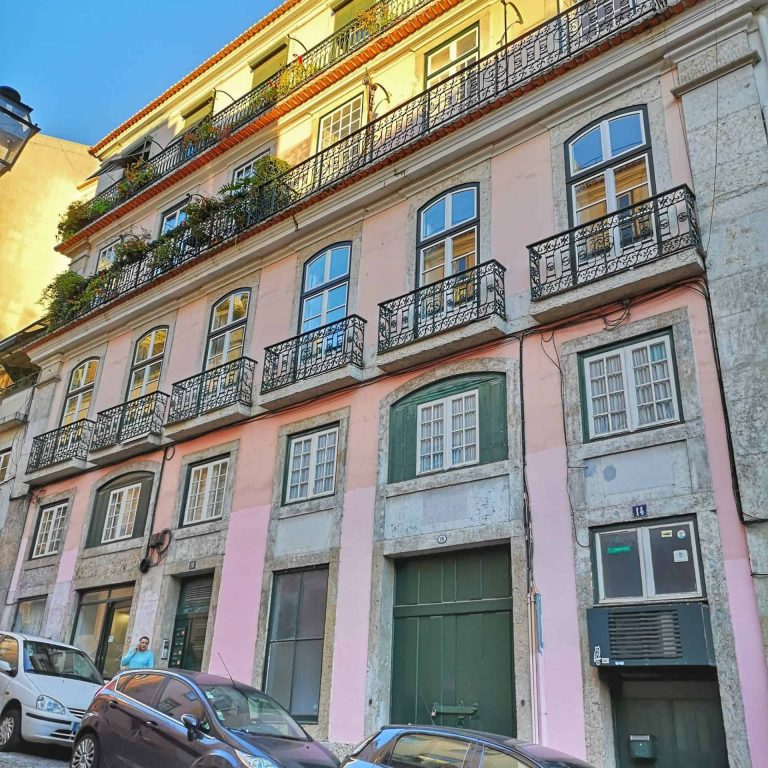
Dr. Andrade's home is located at 16, rua das Flores. The 3rd floor is currently under repair. Future residents/tourists will have the chance to sleep in the room where young Emilia and Vicencia were brutally slaughtered...
The fall of the Pancada gang
Frightened by the turn of events, Manuel Alves takes refuge at his cousin's house. All of Lisbon is talking about it ! The only survivor, Dr Andrade, had left the previous night for Carcavelos for a day of rest. He immediately accuses Manuel Alves ! The police are on his tail. Panicked, remorseful and ready to break down, Manuel accepts Antonio Martins' proposal to go into exile in Spain after getting his share back. Enterrador comes to get him that evening and takes him to their new hideout in Arroios. The Parreirinha and Diogo welcome them with joy in a comfortable house bought with money from the Count of Mesquitela. A feast awaits them and the alcohol flows freely. Completely drunk, Manuel Alves lies down on a bed and does not have time to sleep when Diogo's herculean hands crush his neck, leaving him no chance. Enterrador immediately buried him in the house's garden. The story does not say whether the corpse was recovered, but so ends the life of the pitiful Judas of the Andrade family.
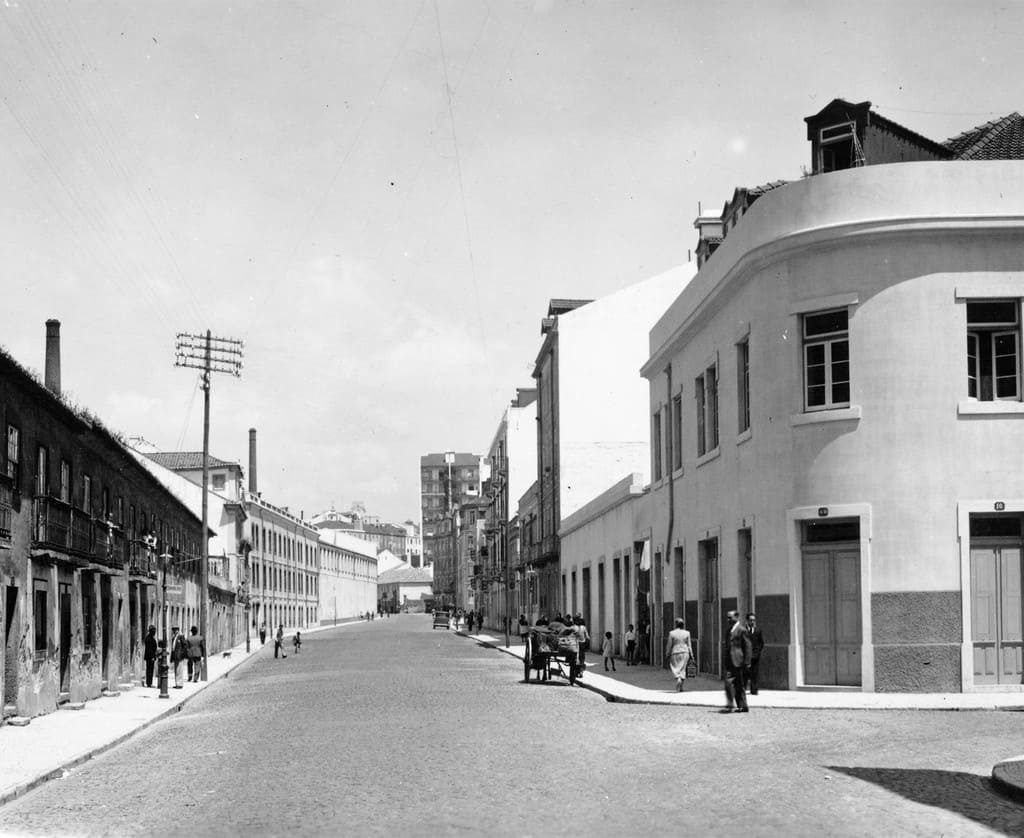
This is the ancient rua de Arroios with the Cerveja Leão brewery (formerly palácio do Conde de São Miguel) in the foreground. In the background, the Arroios wool factory (formerly the Mesquitela Palace).
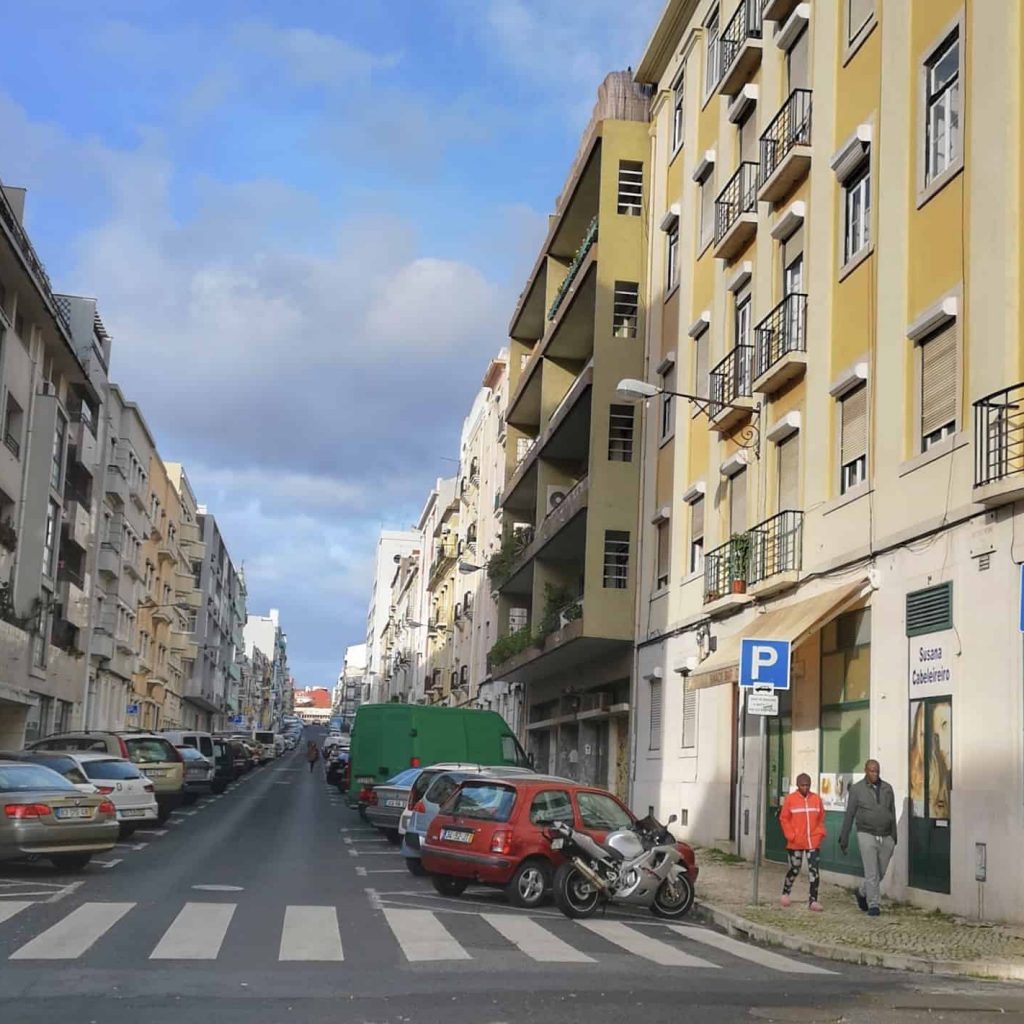
The old Rua de Arroios is now Rua Antonio Pedro. From the archive images, we can estimate that Diogo Alves' hideout was located between number 17 and number 25. If you have a garden in this street, don't try to dig it up!
The investigators soon get onto the trail of Antonio Martins, Manuel Alves’ cousin. Denying everything, Antonio is closely watched. In October 1839, João das Pedras, known as Enterrador, was arrested after a failed robbery in Costa do Castelo. Panic among the robbers ! Locked up in Limoeiro jail (Alfama), João das Pedras sends a message to Antonio Martins asking him for money to buy tobacco. Antonio enjoins him to give him the money with a card bearing this message : “Be very careful with all the questions asked, the devil must not discover anything”. Unfortunately, the young man carrying the message is caught by a guard who immediately informs the judge. After a very tough interrogation, Enterrador finally confesses everything. This is the end for Pancada and his unfortunate companions.
Diogo, Antonio Martins, Pé de dança are in Limoeiro jail with Enterrador, I can imagine the warm reunion ! The judgement was handed down on 13 July 1840, in the former convent of the Paulistas (calçada do combro). Of the gang, only Pé de dança, Apalpador and the Parreirinha escaped hanging. The first one was sent to the camps in Angola, the last one to Mozambique.
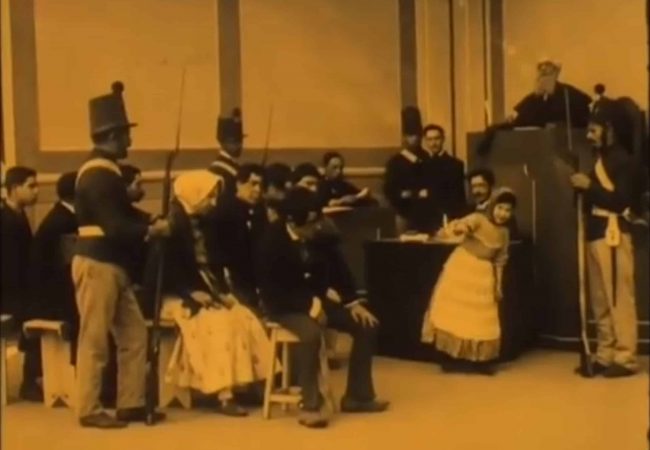
Screenshot from the silent movie Os Crimes de Diogo Alves (1911). During the murder of Manuel Alves, Gertrudes' young daughter Maria was sleeping next door. The Parreirinha, suspecting her of having seen and heard everything, orders Diogo to kill her. Pancada refuses, thinking that she was in a deep sleep. This rare glimmer of humanity in Diogo Alves will be his undoing, as the young Maria later testifies against him and her mother. During the trial, Gertrudes exclaims, "What a shame, Judge, that he didn't kill that monster!"
Shopping Basket
Talk with us :)
1
Bom dia ! How can I help you? Please click on the button at the bottom right to start the chat.