History of Lisbon #10
Constantino, herald of the florists
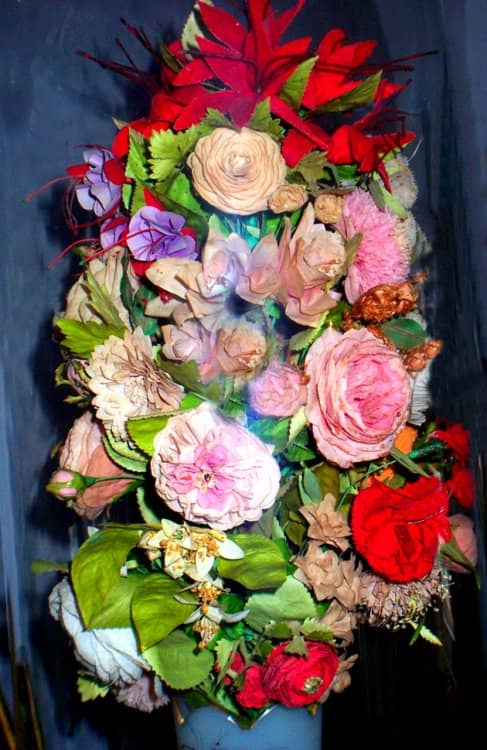
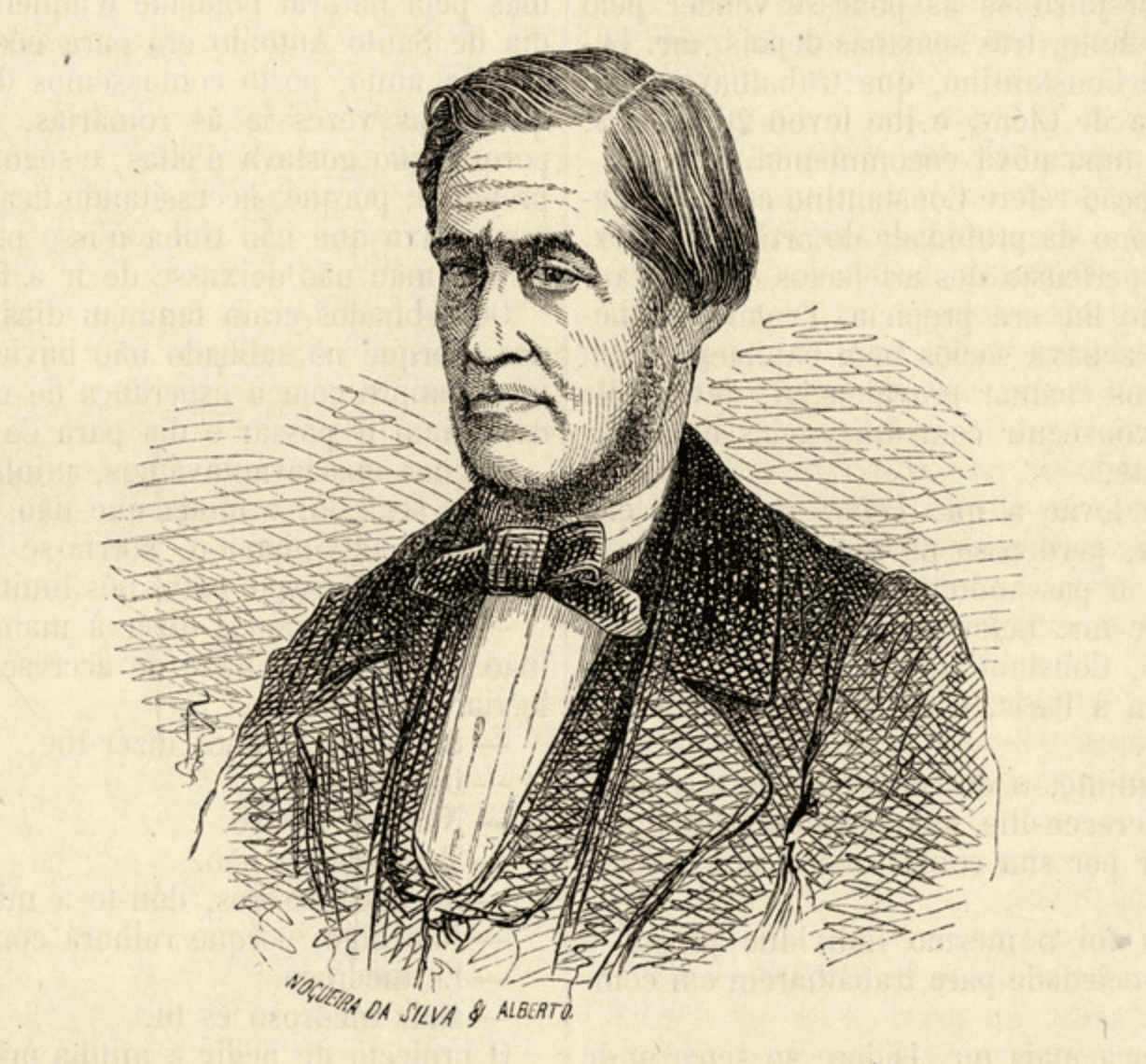
When they knock on our doors at the arrival of spring, the first flowers bring that simple happiness that is the announcement of happy days. Their beauty, their blooming have a language that transmits a feeling, a thank you, a hope. They are the very inspiration of the Romantics who, in the 19th century, found their hero in Portugal. His name ? Constantino José Marques de Sampaio e Melo.
Do you know the Constantino Garden in Lisbon ? Located in the heart of the Arroios district, near the Dona Estefânia Hospital, this green lung remains insignificant to people passing by. Yet it is here that we find the last remaining evidence of this illustrious Portuguese man who, in the 19th century, was his country's ambassador to the rest of Europe. As Plutarch said so well, "ingratitude towards great men is the mark of strong peoples". Let justice be done for his posterity !
Flowers bloom in the shade
Born in 1802 near the city of Bragança, Constantino lost his parents very quickly to typhus. He was taken in by his aunts, who dedicated his life to religion and sent him to the Franciscan friars in Moncorvo as a teenager. Not having a monastic vocation, the young man disliked the rules of life imposed on him and spent most of his time in the countryside instead of isolating himself in the cloister. It was here that he began to be animated by the flowers in the garden and to make his soul into that of an artist. Against the wishes of his aunts, who threatened to expel him if he refused to take holy orders, he decided to leave the convent and set off for Viseu without warning.
Arriving in the capital of the Beira, Constantino met the hunters of the fifth brigade. Orphaned, unattached and with an uncertain future, he embraced the career of a young soldier. He had barely put on his uniform when the liberal revolution in Porto broke out in 1820. In 1824, after the counter-revolution, his brigade was demobilised. Constantino left the mainland to change his life and landed on the island of Terceira in the Azores. There, Constantino began to create feather flowers to occupy his time, renewing his youthful passion.
In 1828, the Portuguese civil war was raging in Portugal. Pedro IV, a liberal, and his brother Miguel Ist, an absolutist, were engaged in a fratricidal war. By fleeing the island of Terceira, which had been acquired by the liberals, Constantino supported the Miguelist cause. This was an extreme position that led him to take part in the greatest battles of the two enemies. From Porto to Lisbon, he was the standard-bearer of his comrades in arms… until the ultimate defeat. In 1834, after the capitulation of Evora-Monte, Constantino went into exile in Genoa with Miguel 1st as his companion of fortune.
You don't pull on a flower to make it grow. You water it and watch it grow... patiently. African proverb.
Of all the miguelist emigrants, Constantino was probably the most destitute. His only precious possession was the jewellery of his sister, who died of cholera in Santarém. With his bohemian soul, he wandered the streets of Genoa in search of a livelihood. He was surprised to discover the beautiful artificial flowers in the shop of a French woman, Madame Vieillard, the first florist in Genoa. To show her his talents, he suggested to create a sprig of feather flowers, in the Azores style. But as this type of flower was not in demand in Italy, Mme Vieillard used it to prepare the dyes. Living in total clandestinity and feeling constrained by the Frenchwoman, Constantino decided to set off again. His goal ? Paris. For only the capital of artists could confirm his talent for an art that had smiled on him during his childhood and that the misfortunes of this world had never altered.
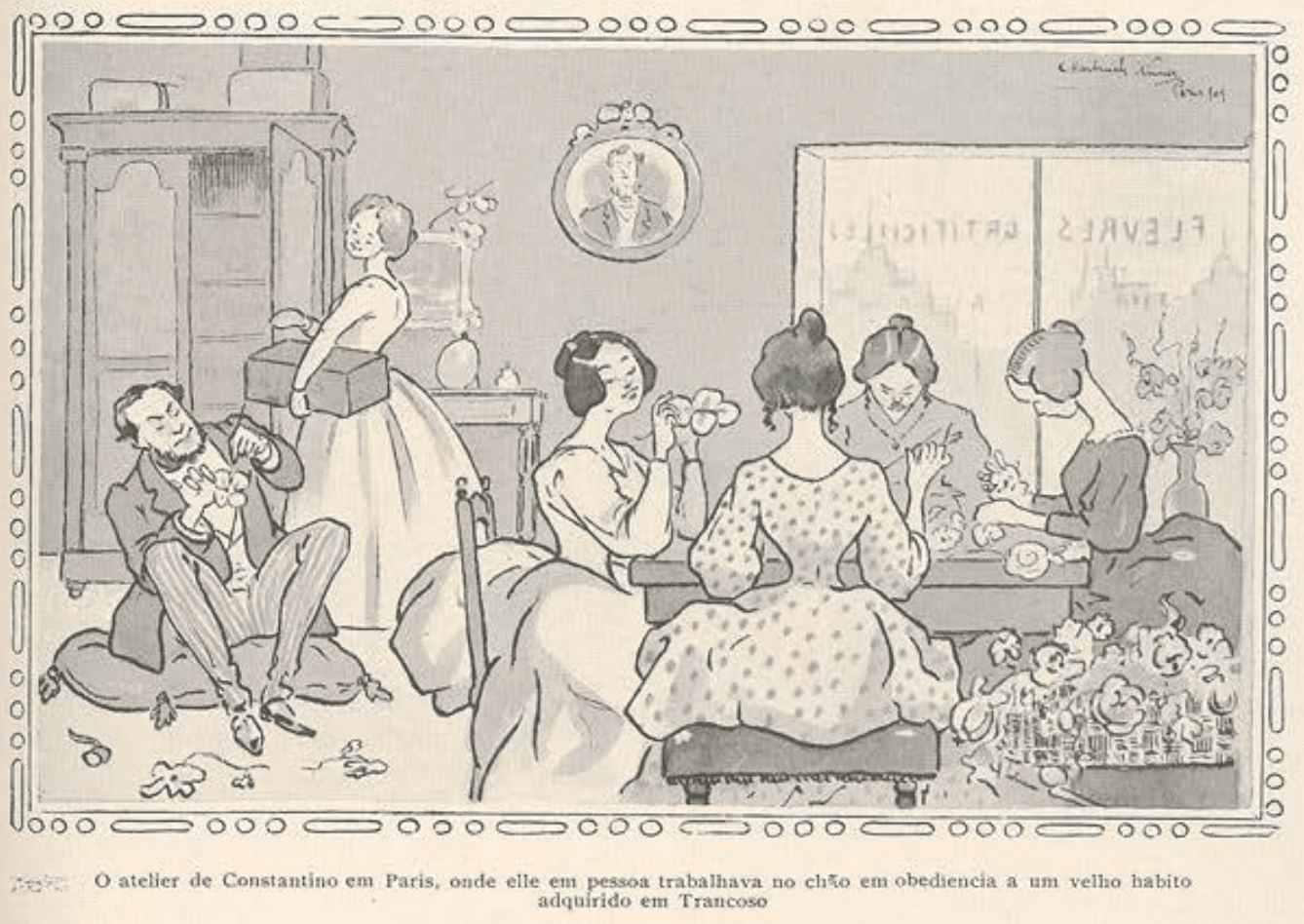
After passing through Turin and Lyon to visit the flower factories, he arrived in the French capital with a small suitcase and 3 francs. Not knowing a word of French, he sought accommodation at the Hotel du Portugal, but even here no one spoke the language of Camões. On the recommendation of Mme Vieillard, Constantino went to see M. Flamet, a leading manufacturer of artificial flowers in Paris. During the dinner, Constantino made his famous sprig of feather camellias which impressed the whole of Paris. The National Guard even gave them to Queen Amélie, wife of Louis-Philippe 1st.
His wealth and fame were made in a short time. In 1839, he was the official supplier to the royal house of France. He then undertook a long tour of Europe, from the Pyrenees to Germany : he studied botany, perfected his much admired art and gave lessons to the royal princesses.
King among kings, here is Constantino O Rei dos Floristas !
Back in Paris in 1844, Constantino was honoured during the national exhibition. One cannot distinguish his creations with natural flowers ! At that time, there was even a colour named after him : Constantino carmine. In Paris, he had no rivals, so he was acclaimed with the highest honours : “Long live Constantino ! Long live the king of florists !”
In 1850, Constantino had the saudade of Portugal, his country, which he had left with a bang 16 years ago. On hearing the news of his imminent arrival, Lisbon was in an uproar. The newspaper A Revolução de Setembro announced in its 24 July edition :
“The famous Constantino, our compatriot, whose artistic talent has given him the title of king of florists, arrived yesterday from London to visit his native land […]. He is staying at the Hotel de l’Europe, rua Nova do Carmo.”
He returned in triumph and received the highest honours from the Portuguese elite. At the Hotel d’Italia, he was invited to a banquet presided over by the most romantic of the Portuguese, the writer Almeida Garrett. What about Constantino’s flowers? Almeida Garrett loves them as much as the women. Dom Fernando and Queen Maria II receive Constantino with great prestige. In Porto, florists sell flores constantinas.
From peak to trough.
The poets praise this national hero who is the pride of an entire people. Among them, António Pinheiro Caldas is eloquent :
“Rival de Deus sobre a terra,
Quem te nega adoração
Quando a França te saúda
– Novo Rei da Criação?!
[…]
Quando colhes d’entre os louros
O mais rico dos thesouros :
– Um triumpho a Portugal?!
Constantino! Como é grande
O teu génio creador,
Quando vertes o perfume
No cálix da TUA flor!
[…]”
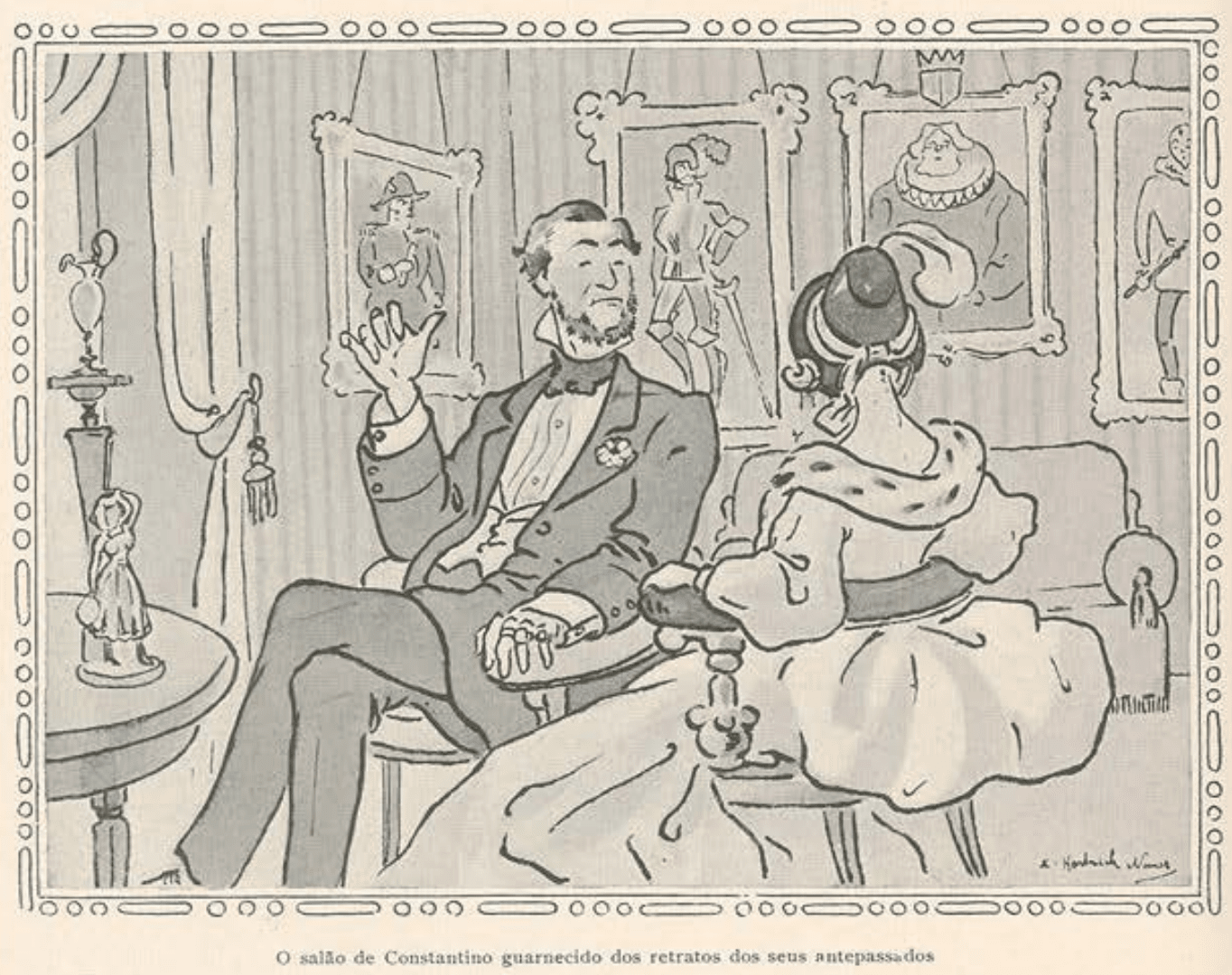
Adulated by the British press at the 1851 London World’s Fair, Constantino worked for all the European sovereigns. But even the artificial flowers wither. Fate was terrible for Constantino. His life will end as it began. Artificial flowers are no longer in demand, the fashion in Paris has changed. Constantino’s illness has left him with no strength to fight. He retired to his estate in the Landes, in Tercis-les-Bains, driven out of Paris by the communards. In January 1873, he died in isolation, far from his family.
The Lisbon municipal bulletin wrote in 1902, 100 years after his birth : “On the 17th of this month, we are celebrating the centenary of a Portuguese man whom the world once hailed as the ‘king of florists’, but it seems that we have all forgotten him. “